Remakes should be built on the strength of their legacy, not simply their appearance
I remember the day clearly. It was about the end of January 1999. A cold, crisp winter day in Leeds. The type of day that produces that wonderful glaring sunshine while still managing to be freezing cold.
I was 18 years old and working as a chef at the Living Room on Greek Street in Leeds. More importantly, I had just survived Christmas. Anyone who has worked in hospitality will know exactly what that means.
Since the end of November I had been working six AFDs a week. For the uninitiated, AFD is a highly technical catering term meaning All Fucking Day.
That particular day, however, I had only been working the prep shift. I finished somewhere around midday, maybe one o’clock, and for the first time in months I got to actually see daylight without knowing I had to be back in the kitchen a few hours later.
Better still, I had a whole week off! An entire week! No split shifts. No Christmas parties. No mountains of prep. No customers. No tickets pouring out of a printer and most importantly no AFD’s!
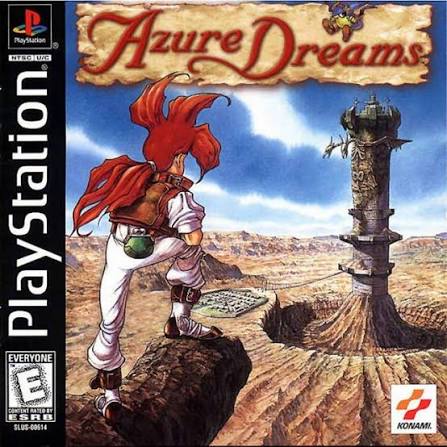
So I am walking through Leeds City Centre and figured with a week of no responsibility ahead of me I might as well pop into GameStation and pick up a cheap game to occupy me for the week. Sitting amongst the second-hand PlayStation games was one I had never heard of. A game that was about to sear itself into my gaming soul for eternity.
Azure Dreams.
I had absolutely no idea that I had just stumbled across what would become my favourite game of all time…For the next week, I no longer lived in Leeds. For all intents and purposes I had relocated to the town of Monsbaiya.
The Monster Tower was unlike anything I had played before. Every trip upwards was a gamble. Every floor presented the same increasingly uncomfortable decision: do I keep pushing and risk everything I have collected, or get out now while I still can?
Today I know that mechanic as part of the roguelike tradition. Back then I just knew it was brutal, It was soul-destroying…It was amazing.
And the tower was only part of it.
I could raise and breed monsters. I could develop the town. New buildings appeared because of the progress I made. Relationships changed. Characters had their own stories. The mystery surrounding the tower slowly unfolded as I climbed higher.
Nothing felt bolted on.
The tower fed the town. The town gave me reasons to return to the tower. My familiars changed the way I approached each expedition. Progress in one part of the game seemed to create opportunities somewhere else.
I played it to death.
Then just short of a year later, I discovered my housemate traded in my copy of Azure Dreams without telling me so that he could buy FIFA 2000.
This betrayal has never been forgiven. Obviously it is entirely healthy to still hold onto this betrayal 27 years later. The problem is I never managed to find another copy. As the years passed I begrudgingly admitted I was never gonna find and own another copy of Azure Dreams. To this day, as I am sitting here writing this article I still don’t.
I attend gaming expos across the UK and Europe and, in all those years, I can only remember physically seeing a copy for sale three or four times in the trader halls. On those rare occasions I have the price is always north of £100 and I just can’t justify paying that much for a game on a console I no longer own.
Yet Azure Dreams never really disappeared from my life.
The PS5 currently sitting in my living room has a custom hand-painted Azure Dreams faceplate.
Nearly thirty years after walking into GameStation, I’m apparently still not over it.
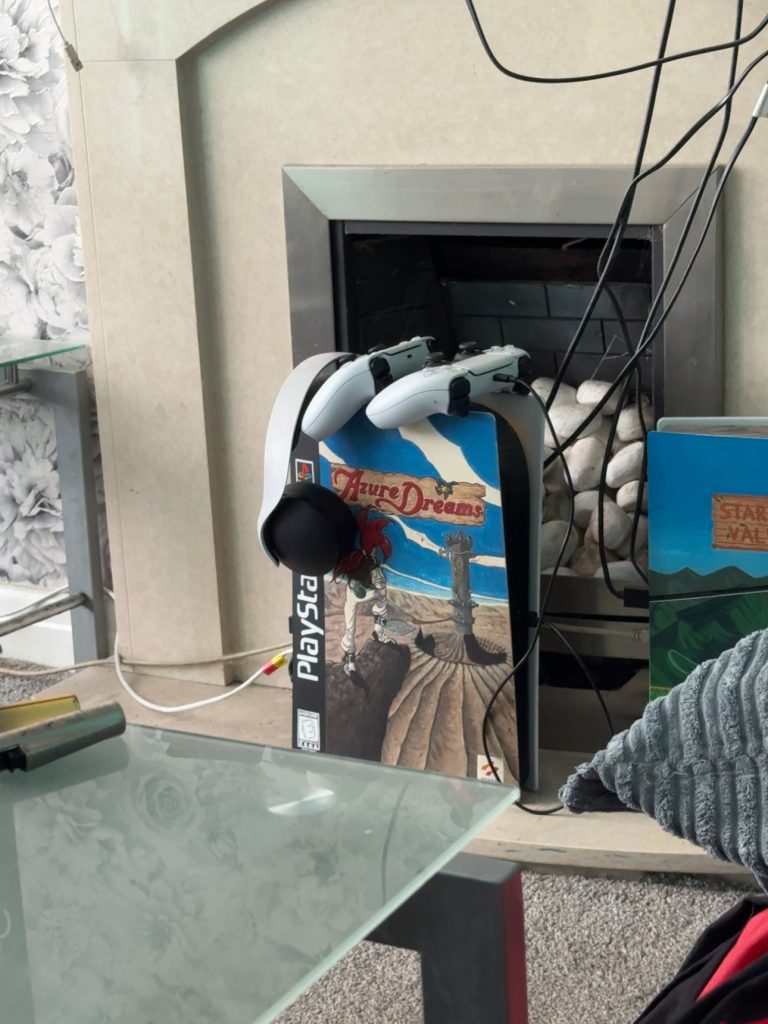
As the years rolled by I eventually discovered emulation. I was so grateful that it allowed me to return to Azure Dreams, However, it never felt the same. The PC would run the game too fast or the controller would never set up correctly. The graphics would tear or glitch. I could venture into that world again but there was always some mild annoyance to remind me I wasn’t playing Azure Dreams properly.
But something stranger happened as the years passed. Nobody I met seemed to have ever heard of Azure Dreams.
These were people who had grown up playing PlayStation games. They knew Final Fantasy VII. They knew Metal Gear Solid, Resident Evil, Tekken and Crash Bandicoot. Mention Azure Dreams, though, and I generally received a blank stare.
For years, my friends genuinely seemed to think I was describing some obscure game that may or may not have existed outside my own imagination. Then social media arrived. Every so often, the discussion of “favourite game ever” or “Best game of all time” would pop up.
“I remember that.”
“I played Azure Dreams.”
“God, I’d forgotten about that game.”
There were people out there after all.
Was Azure Dreams ahead of its time?
The interesting thing about looking back at Azure Dreams in 2026 is that the gaming landscape around it has changed dramatically.
Ideas that felt unusual when I first played it are now everywhere. Roguelikes and roguelites have become one of the defining strands of modern independent games. Titles such as Balatro, Hades, Dead Cells and Curse of the Dead Gods have found huge audiences by building around repeated runs, risk, procedural variation and that irresistible question:
“Can I push just a little bit further?”
I first experienced that feeling in the Monster Tower.
Then look at the enormous rise of cosy and life-simulation games.
Animal Crossing, Stardew Valley, My time at and Story of Seasons series have helped establish an entire genre around developing a place, interacting with its residents, unlocking facilities and watching a community grow around the player.
Azure Dreams was doing its own version of that decades earlier through Monsbaiya.
And then there is monster raising.
Pokémon became one of the biggest entertainment franchises on Earth, while monster collecting, taming and breeding remains an entire genre in its own right.
Again, Azure Dreams was there.
Your familiars weren’t simply creatures to fill a collection. They were companions that grew with you, could be fused and fundamentally changed how you tackled the tower.
I’m not suggesting Azure Dreams invented roguelikes, town building or monster taming. It obviously didn’t. What fascinates me is that one relatively obscure PlayStation game in the late 90’s brought elements of all three together at a time when those ideas hadn’t yet become the enormous genres we recognise today.
Maybe Azure Dreams wasn’t a game that failed to keep up with its era. Maybe the era hadn’t quite arrived for Azure Dreams.
Then Konami started looking backwards
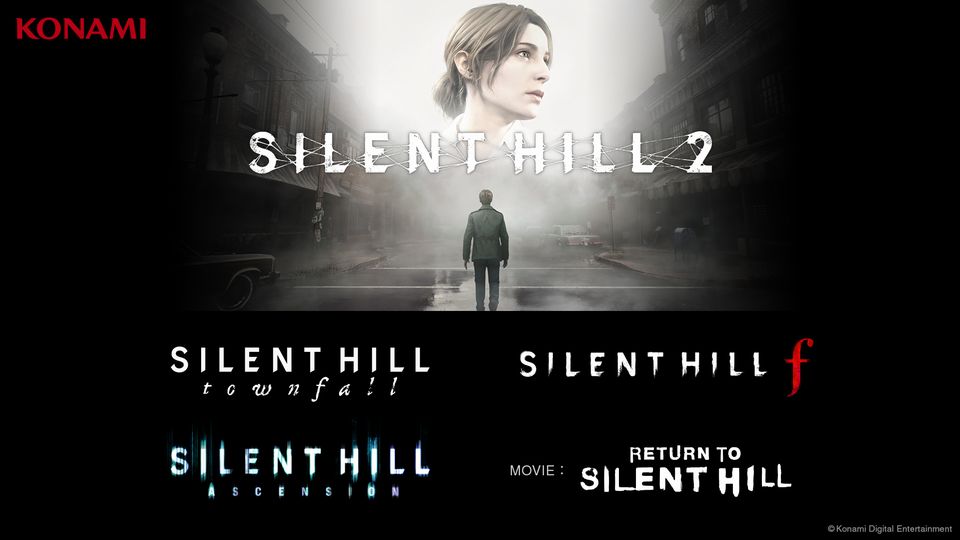
That thought became much harder for me to ignore as Konami began revisiting more of its history. In 2024, Silent Hill 2 received a full remake. In 2025, Konami followed with Metal Gear Solid Δ: Snake Eater, rebuilding Metal Gear Solid 3 while deliberately retaining its core story and game design. The company also brought Suikoden I & II back in an HD remaster.
And Konami clearly isn’t finished digging through the vault.
A remake of the original Silent Hill is now officially in development, while other older properties continue to return through projects such as Metal Gear Solid: Master Collection Vol. 2. Watching all of that happen eventually left me with an obvious question.
What about Azure Dreams?
This amazing little niche game that had seared itself onto my soul almost 30 years ago surely deserves a remake too? But then again hardly anyone has heard of Azure Dreams. I cant exactly reach out to Konami and ask them to remake a game just for me.
And because I’m a journalist, wondering about that wasn’t enough.
I started digging.
That’s when things became interesting….
I Wasn’t Alone After All
For years, Azure Dreams had occupied this strange place in my life. It was my favourite game of all time, yet almost nobody I met seemed to know what it was. I had spent decades assuming it was simply one of those brilliant games that had fallen through the cracks.
Then I started researching it properly. What I found was not a game noone had ever heard of. What I found wasn’t a dead game at all!
It was a community.
There are still people playing Azure Dreams.
There are people speedrunning it.
There are people reverse-engineering it.
At the time of writing this article there were people streaming Azure Dreams on Twitch as recent as 2 and 7 days ago! Azure Dreams as a game has 2.3k followers on Twitch. Let that sink in for a minute. Yes, in today’s internet world 2.3k followers isn’t massive but for a game that was released 27 years ago, was relatively unknown and has had no marketing in 27 years to be that popular is astounding!
There are people creating randomisers, documenting mechanics, preserving knowledge, comparing strategies and discussing a game released almost thirty years ago as if the Monster Tower had opened yesterday.
And then I found the Azure Dreams Discord.
What began as a fairly straightforward attempt to track down one person quickly turned into something much bigger. My research had led me to a community member known as pro_grammar, whose work reverse-engineering Azure Dreams made him, in my mind, an absolute must-have interview for this series.
So I joined Discord and asked if anyone could help me contact him. Within minutes, people were responding!
I learned that pro_grammar had not been active there for several years, but instead of the trail going cold, the community immediately began pointing me towards the people who had helped build and preserve it.
Names started appearing.
SandKnight, one of the people behind the modern Azure Dreams community.
Wugga and SepticTank5, deeply involved in the speedrunning scene.
Others offered context, history and leads.
Suddenly I had gone from wondering whether anybody still cared about Azure Dreams to discovering a network of people who had been keeping it alive all along. And that changed the nature of this project completely. This was no longer just about whether I wanted a remake.I wanted to know why they were still here.
What had kept them invested in Azure Dreams for so long? What did they understand about the game that I didn’t? What had the community discovered, preserved or created over the years?
And perhaps most importantly:
What would the people who have kept Azure Dreams alive actually want from a remake?
That is where this series begins. Over the coming weeks and months, I intend to speak to the people who make up this community. Some interviews will focus on the history of Azure Dreams. Some will look at speedrunning. Some will look at modding and reverse engineering. Some will simply ask why this strange PlayStation game still means so much to people nearly thirty years later.
And if I can manage it, then I want to go further still.
I want to find the people who actually made Azure Dreams.
I want to ask them what they remember about creating it, what they think of the game’s legacy and whether they ever imagined people would still be talking about it three decades later.
Only after all of that do I want to ask the bigger question.
What should an Azure Dreams remake actually be?
Not what I think it should be. Not what a publisher might think will sell. But what the people who have spent years playing, preserving and understanding Azure Dreams believe should survive into a modern version.
Then, when that picture is clear, I intend to take everything we have learned and put the question to Konami. By then, this series will have its own evidence, readers, comments, shares, interviews, community involvement, interest.
Maybe very little.
Maybe far more than I expect.
That is part of the experiment.
For years, I thought I was the weird bloke who wouldn’t shut up about an obscure PlayStation game nobody else remembered. It turns out I may simply have been looking in the wrong places.
And now I’ve found the people who never stopped climbing the tower.
About the Author