WereWorld on Monsbaiya, Lost Ideas and Why He Still Wants a Sequel
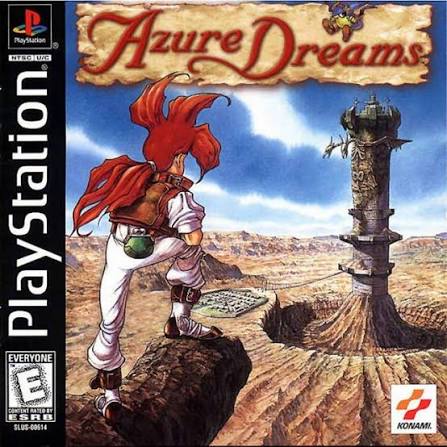
Nearly thirty years after Azure Dreams first appeared on the original PlayStation, people are still talking about Monsbaiya.
That has already become one of the recurring themes of this series. Azure Dreams was never one of Konami’s biggest games, nor did it become a household name alongside the giants of the PlayStation era, but for the people it connected with, it seems to have created an unusually permanent attachment.
WereWorld is one of those people.
He discovered Azure Dreams through what he describes as his “cool” uncle, who played PlayStation while WereWorld was still in middle school and regularly introduced him to games he otherwise might never have encountered.
That same uncle also introduced him to another Konami RPG that remains close to his heart, Vandal Hearts.
Then one day his uncle handed him Azure Dreams with a particularly effective sales pitch:
“I’ve never seen a game that starts with you being born!”
That was enough. Before long, WereWorld had fallen completely into Monsbaiya. He remembers talking about the game to his friends so often that they eventually began rolling their eyes whenever he mentioned it.
Almost thirty years later, he is still talking about it.
Searching for Azure Dreams 2
Like many fans of forgotten games in the years before modern social media communities, WereWorld spent much of the 2000s periodically searching the internet for any suggestion that the story might continue. Once a year he would search for “Azure Dreams 2.” As he puts it now:
“Blissful innocence.”
Much of his early time in the community was spent on GameFAQs, alongside forums for games such as SaGa Frontier. Later, Discord and Reddit became new gathering places for fans. His own relationship with the modern Azure Dreams community is slightly complicated.
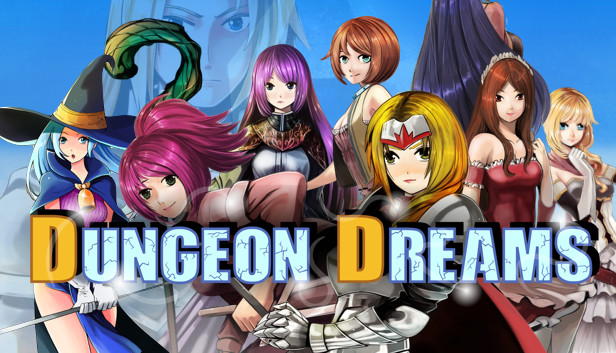
WereWorld created Dungeon Dreams in 2015–16, originally as a tribute to Azure Dreams. What began as a passion project eventually developed into its own series of games, which he continues to work on today. Although not everyone within the Azure Dreams community has embraced it.
WereWorld says the project has sometimes been heavily criticised by other fans, which has led him to maintain a relatively low profile in some community spaces. However, there is one area where his contribution to preserving Azure Dreams history is particularly interesting.
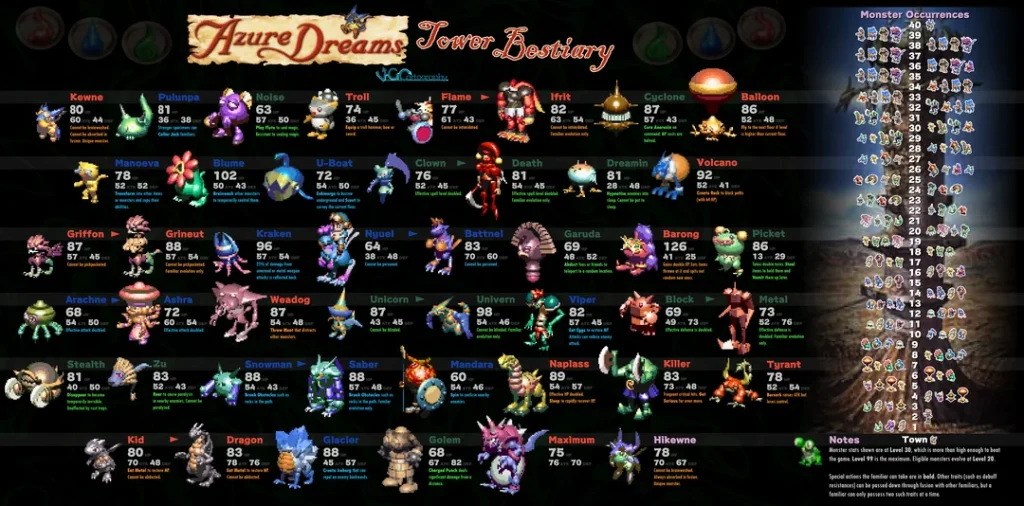
He owns all of the Japanese Azure Dreams guidebooks and has scanned a significant amount of material from them. Those books contain information that many Western players may never have seen.
The Azure Dreams That Might Have Been
Some of the most fascinating discoveries concern ideas that appear to have been considered during development but never reached the final game. One example involves companions.
According to material WereWorld found in the Japanese books, the developers were at one stage considering allowing characters to accompany Koh into the Monster Tower. Concept artwork apparently exists showing an earlier version of Nico who may have been intended to join the player during tower exploration.
For a game whose structure ultimately became so focused on Koh and his familiar entering the tower alone, it is a fascinating glimpse at how different Azure Dreams might once have looked.
WereWorld’s interest in the people behind the game also led him to investigate members of the original development team. Part of that search was simply nostalgia, but he also wanted to know what those developers and artists went on to create. Among the connections he uncovered was that the artist responsible for the Japanese and NTSC cover artwork later produced an illustration for Chrono Cross. He also traced links between the Azure Dreams soundtrack — which he considers a masterpiece — and music from other Konami titles.
Why Azure Dreams Was Different
When I asked WereWorld what separated Azure Dreams from other PlayStation RPGs of its era, his first answer was one that is easy to overlook today.
It was a dating sim.
More importantly, it was one of relatively few games containing those mechanics to receive an English localisation at the time. Then there was the monster-raising system, which now feels strikingly familiar in a gaming landscape where monster taming has become an established genre of its own. But for WereWorld, the real magic goes beyond individual mechanics.
It is Monsbaiya itself.
The routine of entering the tower, returning home, watching the town expand, talking to characters who respond to your achievements and gradually becoming an important part of the community created a feeling that few other games managed to reproduce.
You were not simply completing quests in Monsbaiya. You were living there.
It is something I have repeatedly returned to while writing this series.
Azure Dreams contains roguelike dungeon crawling, monster raising, dating mechanics, town development and traditional RPG progression, but describing the game as a list of systems misses why the combination worked.
WereWorld summed that up perfectly when I asked whether the game had been ahead of its time, or had simply stumbled upon an unusual combination of ideas that happened to work.
His answer?
“Why not both?”
Monsters, Spells and Strange Little Systems
While WereWorld personally remains deeply attached to the story and world, he believes the monster system is probably the part of Azure Dreams most responsible for its lasting appeal.
It is not simply that you collect monsters. It is the strange depth underneath the system. Familiars can learn spells through items with limited charges. Hidden passive abilities exist beneath the surface. Monster development interacts with the roguelike structure of the tower in ways that players can continue discovering long after their first playthrough.
That mixture of visible simplicity and hidden complexity gave the game enormous replay value. The setting was equally distinctive. WereWorld describes it as a kind of “desert fantasy” — something seen occasionally in games such as Xenogears or Breath of Fire IV, but still surprisingly uncommon.
Again, Azure Dreams feels slightly outside the genre conventions surrounding it.
The World Beyond Monsbaiya
One of WereWorld’s childhood disappointments came from a tiny piece of item text. The Wind Crystal allows Koh to escape the tower, but its description refers to returning to “A TOWN.”
Not the town.
A town.
As a child, WereWorld took that wording literally and became convinced that eventually the player would be able to leave Monsbaiya and discover other settlements. It never happened. Neither, despite plenty of hints throughout the game, did marriage. For WereWorld, both ideas represented tantalising glimpses of a larger world that always seemed to exist just beyond the boundaries of the game. That wider world has continued to fascinate him.
At one point he created a text document collecting every reference he could find to locations beyond Monsbaiya across both the PlayStation and Game Boy versions of Azure Dreams. Town names, regional products and tiny fragments of world-building were gathered together.
Some of those details even found their way into his own games as references.
Rumours From the Old Internet
Anyone who grew up gaming before YouTube walkthroughs and searchable wikis will remember the strange ecosystem of gaming rumours. One person claimed something existed. Someone else repeated it. Eventually an entire school playground — or message board — accepted it as fact.
Azure Dreams had plenty of its own.
WereWorld remembers one guide in particular becoming widely used by the community and unintentionally helping spread several rumours. Among them was the belief that Ghosh could somehow become a romance option. Another concerned the ghost of Guy. Whether these stories originated in mistranslation, misunderstanding or simply enthusiastic imagination, they became part of the folklore surrounding the game.
Could Azure Dreams Work Today?
Given the modern popularity of roguelikes, monster-taming games and life-simulation mechanics, it is difficult not to look at Azure Dreams and wonder what might happen if it launched today.
WereWorld has little doubt that it could find a larger audience. The interesting question is what a modern version would look like. He argues that contemporary audiences would inevitably expect some elements to be altered or expanded, and worries that changing too much could undermine the strange mixture of systems and tone that made the original special.
That tension between preservation and modernisation is going to be unavoidable in almost any discussion of a remake. WereWorld also points toward areas where a new version would face questions that simply were not being discussed in the same way in 1998, particularly around romance options, player identity and the ages of many characters.
His own experience developing Dungeon Dreams showed him how strongly players can feel about those subjects. For Konami, a faithful remake would therefore involve more complicated choices than simply replacing the sprites and increasing the resolution.
Remake or Sequel?
Despite all of that, WereWorld admits that if Konami announced almost anything involving Azure Dreams, he would probably be happy.
Other games he loved from the same era — including SaGa Frontier, Final Fantasy Tactics and Suikoden — have since returned through remasters, remakes or new releases.
For him, two names remain conspicuously absent.
Vandal Hearts.
And Azure Dreams.
“If I ever get rich from my own games,” he jokes, “I swear I’ll do it myself.”
But when pushed on what he would genuinely want, his answer becomes much more interesting. Not a remake. A sequel.
Nearly thirty years later, WereWorld wants to know what happened next.
He imagines opening the game years after the original story with an adult Koh, already married to whichever character the player chose, and finally preparing to explore that mysterious second tower.
His preferred romance options?
Selfi, Nico or Fur.
And honestly, that concept captures something essential about the strange loyalty Azure Dreams inspires.
Fans are not simply asking to play the same game again with prettier graphics.
They want to go back to Monsbaiya.
They want to see what happened to everyone.
They want to discover what lies beyond the town.
They want to climb another tower.
WereWorld says that even today, simply listening to the soundtrack can still make him emotional. After nearly thirty years, that connection clearly hasn’t gone anywhere. And perhaps that is the strongest argument for why Azure Dreams deserves another chance.
Not because nostalgia says every old game needs a remake but because for a small and remarkably persistent community, Monsbaiya never really stopped existing.
About the Author